Nutrex Research T-Up Max Review: Safety & Interactions
Nutrex Research T-Up Max safety review: Fenugreek extract, ingredient overlap and questions for a clinician. Includes a clearly identified recommendation.
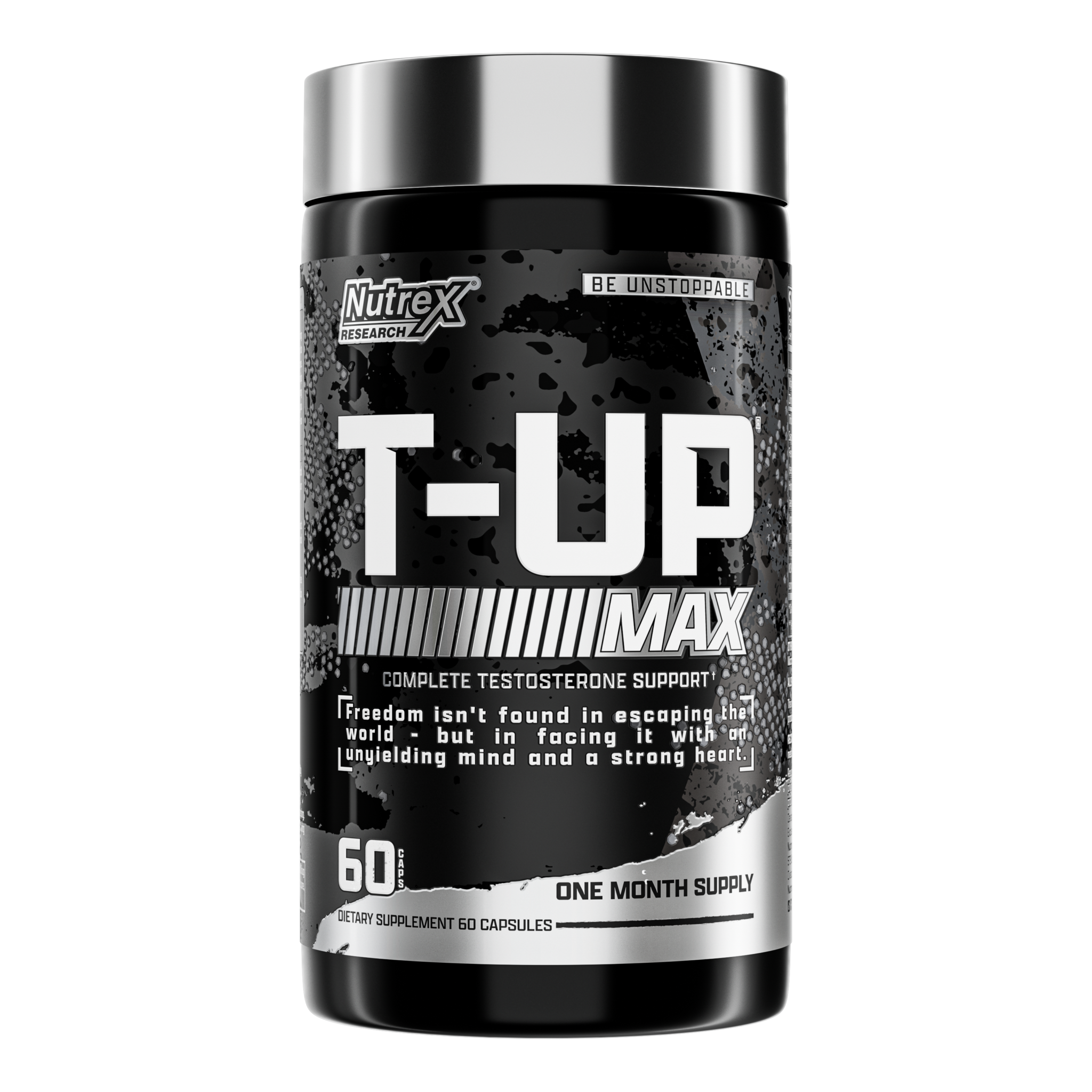
Nutrex T-Up Max is a particularly good example of why supplement reviews need current label research. Older T-UP listings emphasized D-aspartic acid, while the present T-Up Max formula is a different multi-herb product. A review that repeats older D-aspartic-acid trial language as evidence for the current bottle would be evaluating the wrong formula. The present product should be assessed on its own ingredients, doses, and available evidence rather than inheriting a clinical story from a.
Published-label and research assessment. We checked current catalog information, available Supplement Facts images and linked scientific sources. No personal use, independent laboratory testing or head-to-head trial is claimed. Two promotional recommendations concern products or services sold by the owner of this publication.
Is Nutrex Research T-Up Max the right fit for your goal?
Nutrex Research T-Up Max is worth evaluating for its actual formula and current label, rather than its reputation alone. This review looks at men’s health questions to ask: what is documented, where the evidence is limited, and which practical questions matter before a purchase. The aim is a useful decision, not a score assembled from promotional claims.
We also identify Max T as a category-matched option from our own range in two clearly marked recommendation sections. That commercial relationship does not change the evidence standard applied to Nutrex Research T-Up Max. Genuine strengths are acknowledged, unresolved details stay unresolved, and no hands-on testing or clinical superiority is invented.
Review the new formula, not the old reputation
Nutrex T-Up Max is a particularly good example of why supplement reviews need current label research. Older T-UP listings emphasized D-aspartic acid, while the present T-Up Max formula is a different multi-herb product. A review that repeats older D-aspartic-acid trial language as evidence for the current bottle would be evaluating the wrong formula. The present product should be assessed on its own ingredients, doses, and available evidence rather than inheriting a clinical story from a previous version with a similar name.
The current concept is easy to understand: two capsules combine men's-vitality botanicals with vitamin D and zinc. The principal amounts are disclosed, making it possible to compare the formula directly. That is a useful strength. It does not establish that the combination raises testosterone in every user, produces reliable muscle gains, or treats sexual dysfunction. The best assessment is neither an automatic endorsement because Nutrex is recognizable nor an automatic dismissal of a multi-ingredient product. It is a careful explanation of what is actually in this bottle.
A straightforward two-capsule format
The current bottle contains 60 capsules, with two capsules making a serving and 30 servings per container. The brand directs daily use between meals. That is a relatively manageable routine compared with formulas requiring several servings throughout the day. For practical comparisons, the relevant quantity is one month's directed use, not simply the number of capsules on the front. A product with more capsules can still last the same amount of time if its daily serving is larger.
The formula provides vitamin D3 at 50 micrograms and zinc at 10 milligrams per serving. Its botanicals include tribulus, fenugreek, and horny goat weed at 300 milligrams each, with tongkat ali, maca powder, and KSM-66 ashwagandha at 100 milligrams each. These are distinct preparations, so equal milligram amounts do not imply equal biological activity. The useful distinction is the formulation approach without constructing a simplistic ingredient leaderboard in which the largest number wins or a familiar branded extract automatically validates the complete combination.
Standardization helps, but the dose still matters
Nutrex identifies tribulus as standardized to 45-percent saponins, horny goat weed to 20-percent icariins, and KSM-66 ashwagandha to 5-percent withanolides. Those details are more informative than plant names alone because they identify something about the extracts' intended composition. They also give readers a way to understand why two products containing the same herb can differ materially. However, standardization does not turn a label into a clinical trial, and concentrations should not be translated directly into promised hormonal or sexual outcomes.
The ashwagandha amount is especially worth evaluating in context. The presence of KSM-66 gives the ingredient a recognizable identity, but the 100-milligram amount should not casually be described as matching any study using a different daily quantity. The same principle applies to tongkat ali: the reviewed formula supplies 100 milligrams, but the name alone does not establish that its extract and dose match a favorable published trial. Ingredient selection is one part of formulation assessment; matching clinical conditions is another.
Testosterone and sexual wellness are separate outcomes
Several ingredients in T-Up Max have histories of use in men's sexual-wellness products. That makes the product relevant to readers browsing testosterone and vitality categories, but it does not mean every ingredient has demonstrated a testosterone increase. Tribulus illustrates the distinction well. Human research has not established it as a dependable testosterone booster, even though selected sexual-function studies involving particular extracts have generated interest. It would be misleading to combine those different endpoints into a single claim that the formula raises hormones and therefore fixes sexual performance.
Maca and horny goat weed should be handled with similar care. A traditional reputation or a plausible biochemical mechanism is not proof that this exact product treats erectile dysfunction. The scientifically honest question is which outcome has actually been studied in humans using a sufficiently similar preparation. T-Up Max can be described as a multi-ingredient men's-support supplement without promising prescription-like effects. No controlled study of the complete current T-Up Max formula was identified during this research, so its combined benefits remain less certain than the ingredient list may suggest.
Put urinary symptoms and wellness shopping in different lanes
Men sometimes encounter testosterone, circulation, libido and prostate claims during the same shopping session. That does not make those claims interchangeable. A product’s presence in a men’s wellness category does not establish that it relieves urinary symptoms, treats prostate enlargement or changes prostate-disease risk. For Nutrex Research T-Up Max, stay with the actual current formula and the outcomes supported by the relevant research. Avoid filling gaps in the evidence with assumptions based on the audience or the name on the bottle.
New, persistent or worsening urinary symptoms deserve an appropriate clinical discussion, particularly when there is pain, blood in urine or difficulty passing urine. A supplement review should not become a reason to delay that conversation. The practical goal is to understand where a product might fit in a routine while keeping diagnostic questions with someone qualified to address them. That boundary remains important even when an ingredient is familiar from other men’s health formulas.
What a testosterone-support comparison should establish
A useful testosterone-support review distinguishes normal nutritional support from treatment of a hormonal disorder. A formula may combine minerals, vitamins and botanicals with different kinds of evidence. Some research concerns people with low baseline levels or a particular deficiency; other studies examine selected extracts in small groups. Neither situation justifies promising the same result to everyone. Ingredient research is relevant context, but the complete product, preparation, dose and study population still matter.
More ingredients also mean more comparison work. Check what is individually disclosed, what sits inside a blend and what overlaps with other products. Extract ratios and herb-equivalent numbers need careful reading. A plant name shared between two formulas does not establish matching exposure, and a larger headline quantity does not settle efficacy. If two sources disagree about the current formula, the disagreement should remain visible until the manufacturer resolves it.
For a reader deciding whether to buy, the reasonable conclusion is specific rather than universal. Evaluate the product’s documented strengths, unresolved questions and fit with a realistic routine. If symptoms suggest a possible hormonal issue, discuss appropriate evaluation instead of treating a supplement as a substitute for diagnosis. Our category-matched recommendation offers another label and purchase option to assess; it does not establish that an owned formula raises testosterone more effectively or treats clinically low testosterone.
The milk declaration is easy to miss
The official label expressly says that T-Up Max contains milk. That matters because the same presentation uses a vegetable capsule and emphasizes that the capsule material is free of animal products. Those statements concern the shell, not necessarily every ingredient or allergen in the finished product. It would be misleading to call the overall supplement vegan, dairy-free, or suitable for a person with milk allergy merely because the capsule is vegetable-derived. The label's allergen declaration is a clear, decision-relevant fact.
This is a good place for a concise practical warning rather than a long generic safety section. Readers with a relevant allergy need the information before purchase. Readers without that allergy still benefit from seeing how carefully the review distinguishes the shell from the complete formula. It is important to avoid speculating about which component introduces the allergen unless the manufacturer confirms it. The verified fact is enough: current official packaging declares milk, and anyone making an allergy-sensitive decision should use the current physical label rather than an older retailer description.
Nutrients and botanicals belong in the full routine
The 50-microgram vitamin D amount and 10-milligram zinc amount are straightforward to identify, but their relevance depends on what the reader already consumes. Vitamin D and zinc contribute to normal physiology; that does not imply that additional intake will keep raising testosterone in a person who is not deficient. The assessment can acknowledge the nutritional rationale while discouraging the idea that more is always better. Comparing the whole daily routine is more useful than judging either ingredient in isolation.
Ashwagandha also has specific considerations that the word natural does not erase. NCCIH discusses medication interactions, thyroid concerns, and rare reports of liver injury. Those points should be explained proportionately, especially for readers with existing conditions or complex regimens. It would be misleading to imply that T-Up Max itself was found harmful in a study if no such study was identified. The accurate distinction is between ingredient-related caution and documented finished-product findings. That distinction protects fairness to the competitor and gives the reader a more useful basis for deciding whether further advice is needed.
Promotional alternative: compare Max T using its current label
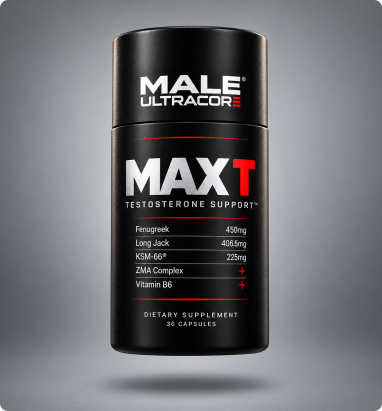
Max T is a category-matched alternative to explore if you are comparing testosterone-support formulas and want another ingredient approach alongside T-UpMax. Review its current panel, format, and purchase terms to see whether the routine fits your priorities. The reason to compare is a different formulation, not an established finding that Max T is stronger, faster, safer, or more effective. Those claims would require their own evidence, and no head-to-head result establishing them was found here.
The milk declaration on T-UpMax also illustrates why comparisons need current labels. If allergy suitability matters, verify the promoted product's actual declaration rather than assuming that another bottle avoids the same allergen. The same discipline applies to dose and extract comparisons. A familiar ingredient name or branded botanical is useful information, but does not prove identical preparation or equivalent results. Max T's promotional invitation can help you explore another option while leaving the actual decision grounded in verified details and realistic expectations.
The decision: convenient dosing, current-formula evidence limits
T-UpMax's practical strengths are its two-capsule routine, disclosed principal amounts, and botanical standardization details. Its limitations include the absence of an identified current-formula controlled trial and the difficulty of applying studies of different extracts and doses to the complete combination. The milk declaration is an important purchasing fact, particularly because a vegetable capsule can otherwise create the wrong impression about the finished product. Older D-aspartic-acid T-UP claims do not settle the evidence for this newer formula.
To compare a different testosterone-support formulation, explore Max T's current ingredients and purchase options. Use the same questions on both sides: what is the daily dose, which preparation is supplied, what was actually studied, and does the product fit your health and dietary needs? That approach recognizes T-UpMax's convenience without converting a branded ingredient into a guaranteed result. Persistent symptoms remain a separate reason to understand the cause, rather than assuming a switch between supplements answers every question.
Review the complete ingredient list with your existing care
The relevant comparison is not only bottle versus bottle. It is also a proposed formula versus the medicines, other supplements and health conditions already in your life. Overlapping minerals or botanicals can be easy to miss when each product uses different front-label language. Include the full Supplement Facts panel and serving directions when asking a pharmacist or clinician about compatibility. Product names alone often conceal the details needed for a useful answer.
Hormonal goals, sexual symptoms and urinary concerns may need different evaluations and treatment discussions. The recommendation boxes in this review offer another product in the matching shopping category; they are not a claim that an owned supplement treats prostate disease or replaces prescribed care. That makes the comparison more grounded: consider the actual label, the quality of the supporting evidence, any individual precautions and the practical cost of following the stated directions.
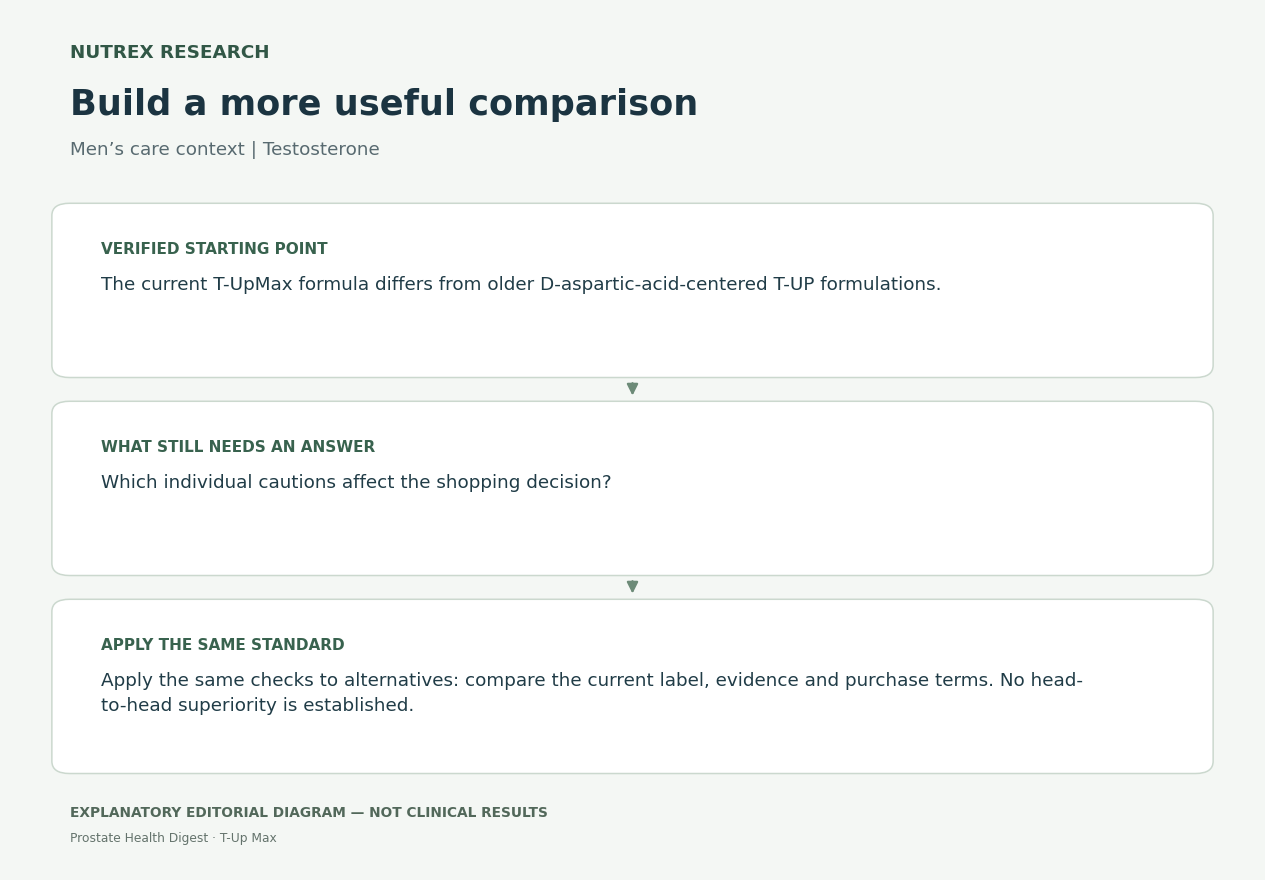
How to compare Nutrex Research T-Up Max with Max T
Start with the actual goal rather than a presumed winner. Nutrex Research T-Up Max and Max T deserve a comparison of their present product or service details, the kind of evidence available and the practical routine involved. Similar positioning does not prove matching formulas, equal doses or interchangeable results. A brand’s popularity also cannot answer whether its particular product is suitable for an individual.
Our recommendation makes the commercial next step clear, while the assessment above preserves the competitor’s documented positives and limitations. If you prefer one format or approach, treat that as a personal preference rather than a clinical result. Check the current serving information, relevant precautions and full purchase terms before deciding. Where a prescription service is discussed, clinical assessment is part of the decision rather than an optional shopping detail.
The verdict: choose for fit, evidence and a realistic routine
The strongest reason to consider Nutrex Research T-Up Max is the combination of documented features described in this review and a goal that actually matches its category. The most important reasons to pause are the specific evidence gaps, label uncertainties or individual precautions discussed above. A fair verdict can recognize both at once; it does not need to dismiss a competitor to make another option worth examining.
For a category-matched next step, the recommendation below highlights Max T from our range. Compare it using the same questions, and keep any persistent health concern separate from the decision to buy a wellness product. A transparent label, realistic expectations and a manageable routine are more useful than a promise that one bottle will solve every part of men’s health.
Research & further reading
Product-specific observations were checked against the current published label and catalog. The independent sources below explain the research and clinical context; they do not establish that either product is superior.
Continue reading
Our Max T review · More on testosterone · All product reviews