Green tea extracts and prostate claims: what a concentrated capsule changes
Green tea as a beverage and concentrated extracts should not be treated as identical evidence or safety questions.
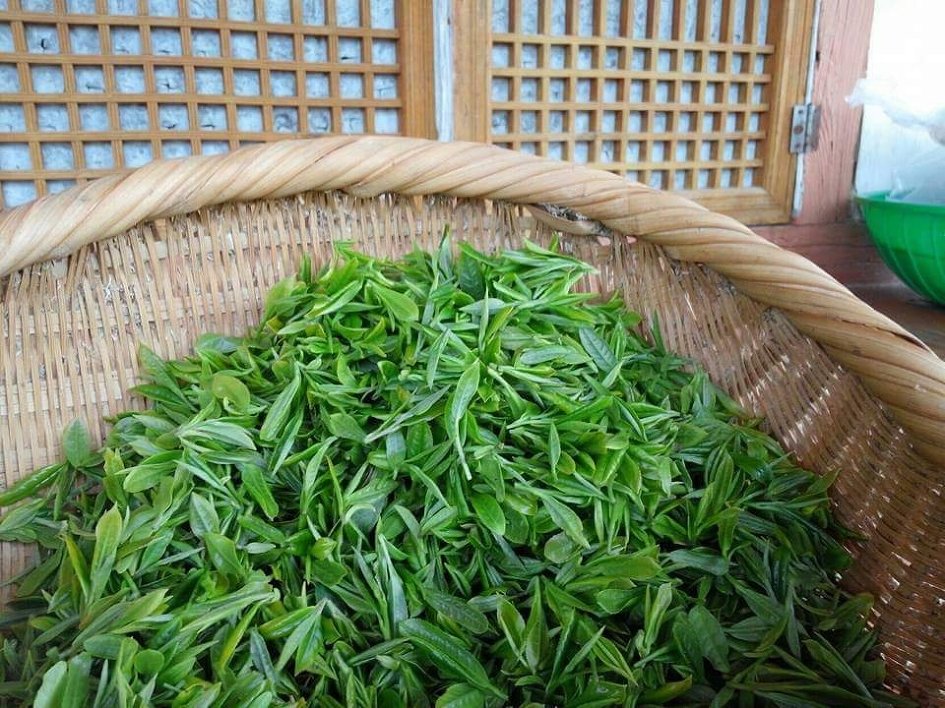
A green tea extract requires its own benefit and safety assessment; beverage familiarity does not establish prostate protection.
A familiar drink can become an unfamiliar exposure
Green tea appears in prostate supplement marketing because its plant compounds have attracted scientific interest. A cup of tea, however, is not the same product as a capsule designed to deliver a concentrated extract. The preparation, amount, and way it is used can all change when a familiar food becomes a supplement.
The National Cancer Institute's review of prostate nutrition discusses green tea research but does not provide a basis for treating an ordinary extract as proven prostate cancer prevention. The relevant question is not whether tea has a long history. It is whether a specific supplement produces a meaningful benefit in the people considering it.
Mechanistic research opens a question
Cell experiments can investigate how tea compounds interact with biological processes. Such experiments are valuable for developing hypotheses. They do not show what happens when a person swallows a capsule over months or years. Human digestion, metabolism, differences between participants, and the amount reaching a target tissue all stand between a laboratory observation and a clinical effect.
That gap becomes particularly important when marketing uses phrases suggesting that a compound targets abnormal cells. A mechanism described in a research paper is not a demonstration that a product prevents disease. Readers should look for human trials with a clearly described comparison group and an outcome matching the advertised promise.
Prevention studies need time and context
A prevention claim implies an effect on future disease risk. Measuring that fairly can require many participants and substantial follow-up. A short study may answer a narrower question about tolerability or a blood measurement without being able to answer the prevention question. It is unfair to the research to ask the smaller study to carry the larger conclusion.
Participant selection also matters. A trial enrolling people with a particular prostate finding is not automatically applicable to everyone buying a general wellness product. Understanding who entered the study helps explain what its results can and cannot support. Labels rarely make this distinction as prominently as the phrase prostate health.
Concentration deserves a safety discussion
Supplements can produce exposures different from usual food or beverage use. That is one reason the NIH Office of Dietary Supplements encourages discussion of supplement use with health professionals. The word natural does not answer whether an extract is suitable alongside a person's medicines, medical conditions, or other supplements.
An ingredient list should identify what is being provided, while the serving information shows the intended amount. If a seller emphasizes stronger absorption or greater concentration, those features should prompt questions about safety as well as potential benefit. Increasing exposure is not inherently a good outcome. The amount that can be delivered and the amount that is useful are separate issues.
Decide without borrowing certainty from tea
Someone may enjoy green tea without expecting it to prevent cancer. That ordinary preference does not need to become a supplement project. Conversely, taking an extract for a prostate-related concern should involve an explicit reason, realistic expectations, and review of the evidence for that reason.
A practical discussion can begin with the exact product label and the study cited by its manufacturer. Ask whether the preparation and participants match, whether a clinical benefit was observed, and what safety information is available. If the answer rests mainly on cell studies or the popularity of tea, the prevention claim remains unsupported. A concentrated capsule should be judged as the intervention it actually is.
Read the serving information carefully
The amount printed next to an extract may describe the extract itself rather than every individual compound it contains. Standardization language and serving size can further complicate a comparison with research. If these details are unclear, the formula may be difficult to match to a trial at all. That uncertainty should reduce confidence in a precise benefit claim rather than being filled in with assumptions. Asking the manufacturer for the exact preparation and relevant published human study is a reasonable way to clarify the claim.
Sources & further reading
This article provides educational information. Ask a qualified clinician or pharmacist about your symptoms, medical conditions, medicines and supplement interactions.